When breath meets awareness, transformation becomes effortless.
My Path
I’m Angelica, a certified Master Coach (MCC level, ICI) with over seven years of experience in mystical and transformational coaching. My journey began with a deep fascination for consciousness, energy, and the subtle power of breath. Over time, I’ve guided more than 2,000 people to reconnect with their inner wisdom and live with clarity and balance.
My Method
Through PranaWave Coaching,
I integrate pranayama techniques and alpha brainwave activation within a coaching framework to help clients access higher awareness, mental focus, and emotional coherence. My approach unites ancient breath wisdom with modern neuroscience, creating a bridge between energy and consciousness.
My Studies and Experience
I’ve studied
mysticism, sound healing, yoga, and pranayama , Qi kong , Human body design analysis worked as a wellness specialist for two years in a 5-star hotel in Istanbul. For the past six years, I’ve been teaching both online and in person, combining spiritual and scientific approaches to help people understand their energy, emotions, and mind-body connection.
My Vision
Transformation begins with the breath — where awareness awakens and life flows in harmony.
Why Prana Wave
Research Statement
Through the analysis of questionnaires completed by professional coaches and from my own experiential observations in the coaching field, I identified a recurring pattern indicating that the integration of breathwork and coaching significantly enhances the client’s level of self-awareness and inner connection.
Based on these findings, I formulated the following hypothesis:
The combination of conscious breathing techniques within the coaching process facilitates a higher state of self-awareness, emotional regulation, and clarity in clients.
To examine this hypothesis, a qualitative and quantitative research design will be conducted. The study will involve 15 participants from diverse backgrounds, each engaging in one online session per week over a defined period. Throughout the process, all sessions will be documented and analyzed through:
- pre- and post-session questionnaires,
- graphical and statistical evaluations of the data, and
- reflective notes and observational records for phenomenological insight.
The outcome of this research aims to provide empirical evidence supporting the PranaWave Coaching model, emphasizing how conscious breath awareness can serve as a transformative element in the coaching relationship and the client’s self-development process.
What is prana
Understanding Prana: The Universal Life Force
1. The Essence of Prana
Prana is a Sanskrit term meaning vital life energy — the subtle force that animates all living beings and sustains the functions of the body, mind, and spirit. Derived from the root “pra” (before) and “an” (to breathe or move), Prana literally signifies “that which moves before life.” In yogic philosophy, Prana is the fundamental energy that flows through the universe and within every living organism.
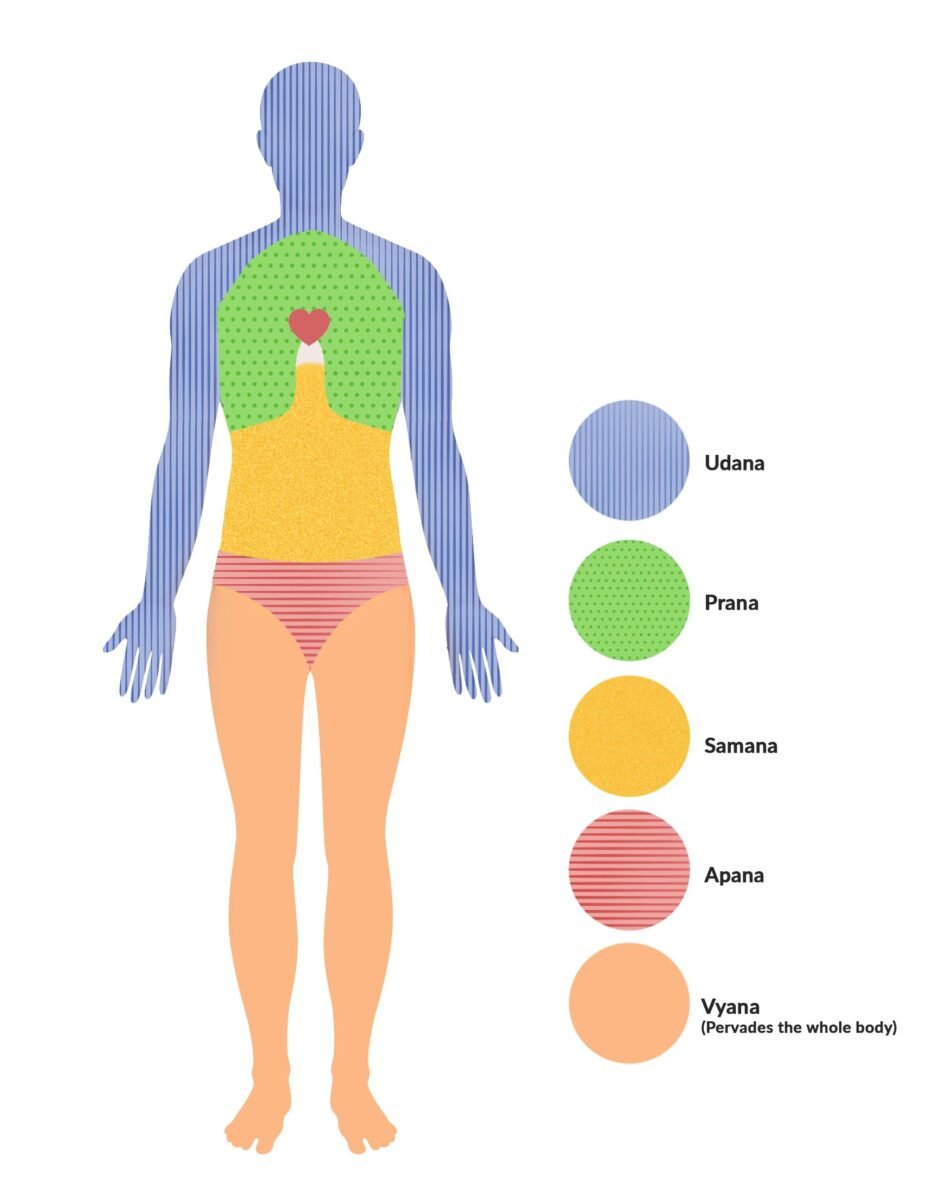
According to the Vedas and Upanishads, Prana is the bridge between the physical and subtle realms. It governs not only breathing but also the circulation of thoughts, emotions, and energy throughout the body. Ancient yogic texts describe five subdivisions of Prana, known as Pancha Pranas: Prana (inhalation energy), Apana (elimination energy), Samana (digestion and assimilation energy), Udana (expression and upward movement energy), and Vyana (circulation and distribution energy). Each of these plays a vital role in maintaining physical health, emotional balance, and mental clarity.
Pranayama — the practice of controlling and expanding Prana through breath regulation — the yogi learns to consciously harmonize body and mind. The breath becomes a vehicle for self-awareness and transformation, opening the path to higher consciousness.
2. Prana in World Traditions
Though the word “Prana” originates in India, the concept of a universal life force is found in nearly every spiritual and medical tradition across the globe. Different cultures gave this same subtle energy various names and interpretations, all pointing toward the same truth — that life is animated by an invisible, intelligent force.
China – Qi (Chi)
In Chinese philosophy and Traditional Chinese Medicine, this energy is called Qi (Chi) — the vital life force that flows through the meridians of the body. Just as Prana circulates through nadis in the yogic system, Qi moves through energetic channels, influencing health, mood, and longevity. Practices such as Tai Chi and Qi Gong are methods to cultivate and balance Qi, enhancing vitality and spiritual awareness.
Japan – Ki
In Japan, the same life energy is known as Ki, a term familiar from Reiki (Rei = universal, Ki = life energy). Reiki healing involves channeling universal Ki through the practitioner’s hands to harmonize and restore the recipient’s energetic balance, mirroring the intention of Pranic healing in Indian traditions.
Polynesia – Mana
Among Polynesian cultures, Mana is the sacred life force that dwells within people, objects, and nature. It represents power, authority, and spiritual potency, showing that Prana is not limited to the human body but pervades all existence.
Egypt – Ka
In ancient Egyptian cosmology, Ka referred to the vital essence or spiritual double that animated a person. At death, the Ka separated from the body but continued to exist, sustained by offerings and prayers — a belief paralleling the Indian understanding of Prana as immortal energy.
Greece – Pneuma
The Greek philosophers, including Hippocrates and Stoics, described Pneuma as the “breath of life” or “spiritus” — a subtle substance that infused the body and gave consciousness. The term shares etymological roots with “spirit,” which in Latin (spiritus) also means “breath.”
Christianity and Judaism – The Divine Breath
In Biblical traditions, Prana appears as the breath of God. In Genesis 2:7, “God breathed into his nostrils the breath of life, and man became a living soul.” The Hebrew term Ruach and the Greek Pneuma both denote spirit, wind, or breath, symbolizing divine vitality moving through creation.
Islam – Ruh
In the Qur’an, Ruh is described as the divine spirit breathed into Adam, signifying the essence of life bestowed by God. Sufi mystics further interpret Ruh as the subtle energy linking human consciousness to the divine source — a clear resonance with the yogic concept of Prana as both personal and cosmic life energy.
Native American Traditions – Great Spirit
Many Native American tribes refer to a universal animating force as the Great Spirit or Great Breath, an unseen presence that connects all beings in the web of life. Ritual breathing and connection with nature were viewed as sacred ways to align with this living energy.
3. Scientific and Modern Perspectives on Prana
While Prana is metaphysical by origin, modern science has begun exploring similar principles under different names. Concepts like bioenergetics, electromagnetic fields, and quantum coherence offer frameworks to understand how living organisms maintain subtle energetic balance. Studies on heart-brain coherence, alpha brainwaves, and bio-photonic emissions suggest that breath regulation and energy awareness can measurably affect physiology and mental states.
Contemporary disciplines such as psychophysiology, neurocardiology, and energy psychology are uncovering evidence that controlled breathing (Pranayama) influences the autonomic nervous system, promoting relaxation, emotional regulation, and heightened self-awareness. In this light, Prana can be viewed as both an ancient metaphysical truth and a modern scientific frontier.
4. The Universal Breath
Across millennia and civilizations, the recognition of Prana — by whatever name — affirms one essential understanding: life is a dynamic interplay of energy and consciousness. To breathe consciously is to reconnect with this source. Prana is the pulse of existence, the whisper of creation that sustains every atom, thought, and heartbeat.
When we align with Prana through breath, movement, and awareness, we remember our unity with the cosmos. Whether called Qi, Ki, Mana, Ka, Pneuma, Ruach, or Ruh, it remains one force — infinite, intelligent, and eternally present.
Type of pranayama
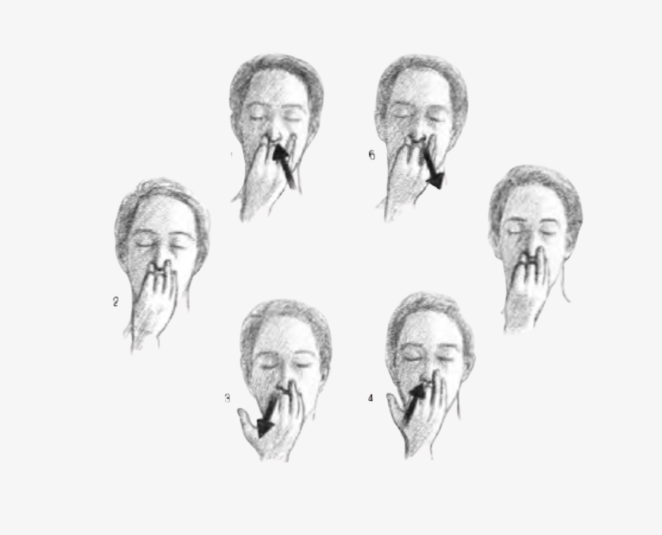
1. Nadi Shodhana (Alternate Nostril Breathing)
Benefits:
• Balances left/right brain hemispheres
• Calms the mind and nervous system
• Improves lung function and focus
Precautions:
• Avoid if you have severe nasal congestion or infection
• People with very low blood pressure should practice gently
How to do it:
1. Sit comfortably with a straight spine.
2. Close right nostril with your thumb, inhale through the left.
3. Close left nostril with your ring finger, exhale through the right.
4. Inhale through the right, close it, exhale through the left.
5. Repeat 5–10 minutes.
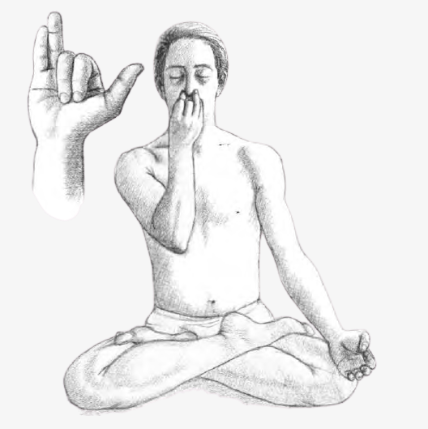
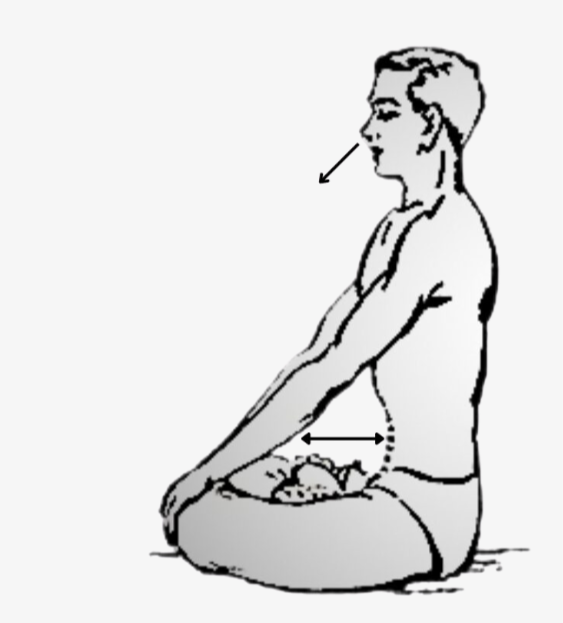
2. Kapalabhati (Skull-Shining Breath)
Benefits:
• Cleanses lungs and sinuses
• Energizes the body
• Stimulates digestion and metabolism
Precautions:
• Avoid during pregnancy, menstruation, high blood pressure, heart issues, or recent surgery
• Don’t practice if you have hernia or stomach ulcers
How to do it:
1. Sit upright, inhale normally.
2. Forcefully exhale through nose by contracting abdomen.
3. Let inhale be passive.
4. Continue in rhythmic bursts for 20–60 seconds.
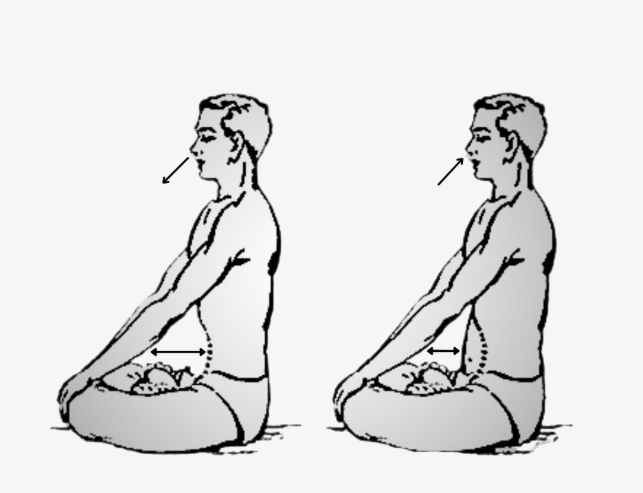
3. Bhastrika (Bellows Breath)
Benefits:
• Boosts oxygen intake
• Increases vitality and body heat
• Good for clearing lethargy
Precautions:
• Avoid with uncontrolled hypertension, panic disorders,
or heart issues
• Stop if you feel dizzy
How to do it:
1. Inhale deeply and forcefully through nose.
2. Exhale forcefully through nose.
3. Keep equal power in both inhale and exhale.
4. Repeat 10–20 rounds, rest, then repeat if desired.
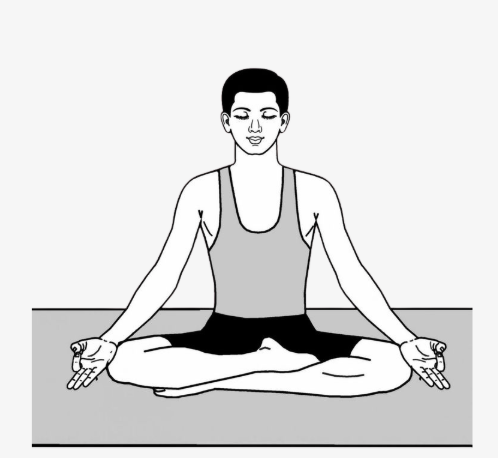
4. Ujjayi (Victorious Breath)
Benefits:
• Warms the body
• Increases concentration during yoga
• Relieves tension and stress
Precautions:
• Avoid if you have throat inflammation or severe respiratory infection
How to do it:
1. Slightly constrict throat as if whispering.
2. Inhale and exhale through nose with soft ocean-like sound.
3. Keep breath slow and deep.
4. Practice during yoga or meditation.
5. Anulom Vilom (Variation of Alternate Nostril)
Benefits:
• Improves mental clarity and respiratory health
• Balances body’s energy flow
Precautions:
• Avoid with severe nasal blockages or acute respiratory illness
How to do it:
1. Inhale through left nostril.
2. Exhale through right.
3. Inhale through right.
4. Exhale through left.
5. Repeat in smooth cycles..
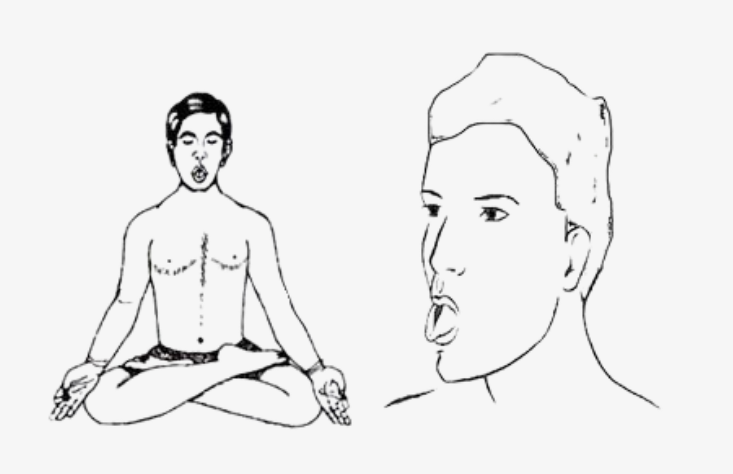
6. Sheetali (Cooling Breath)
Benefits:
• Lowers body temperature
• Reduces anger and stress
• Good for hot weather
Precautions:
• Avoid in cold climates or if you have low blood pressure or asthma
How to do it:
1. Sit comfortably, roll tongue into a tube.
2. Inhale slowly through tongue.
3. Close mouth, exhale through nose.
4. Repeat 5–10 minutes.
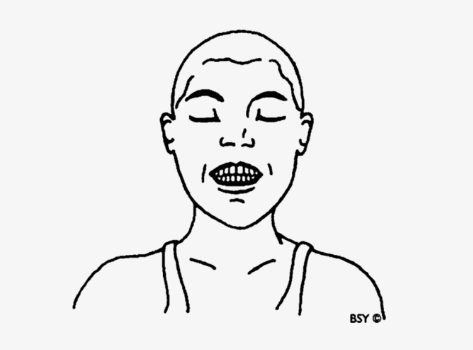
7.Shitkari Pranayama (Hissing Breath)
Benefits:
• Cools down the body temperature (great for hot climates or after intense yoga practice)
• Calms the nervous system and reduces stress
• Helps with high blood pressure and hyperacidity
• Refreshes the mind and reduces anger or irritation
Precautions:
• Avoid in very cold weather or if you have asthma, cough, or cold
• Not recommended for people with low blood pressure
• Don’t practice after a heavy meal
How to Do It:
1. Sit comfortably in a meditative pose (Sukhasana, Padmasana, or Vajrasana).
2. Keep your spine straight and shoulders relaxed.
3. Gently clench your teeth together and keep lips slightly apart.
4. Inhale slowly through the gaps in your teeth, producing a gentle hissing sound.
5. Close your mouth, and exhale slowly through your nose.
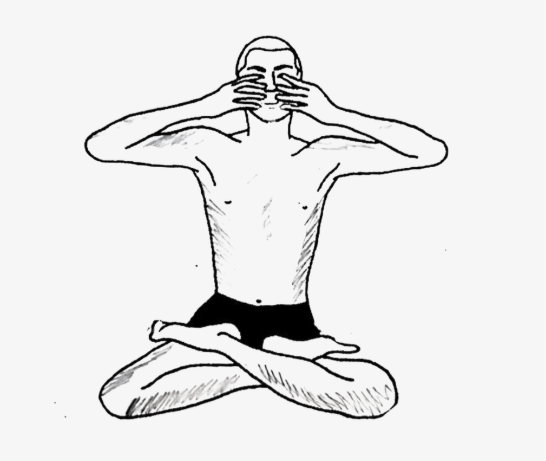
8. Bhramari (Bee Breath)
Benefits:
• Calms anxiety and stress
• Improves focus and sleep quality
• Relieves tension headaches
Precautions:
• Avoid pressing hard on ears
• Skip if you have severe ear infections
How to do it:
1. Sit in meditation posture.
2. Close eyes and ears with fingers.
3. Inhale deeply through nose.
4. Exhale slowly while making humming bee sound.
5. Feel vibrations in head and chest
Type of pranayama
Beginner
- According to time
- Min 20 max max 40 min
- Both nostril
- Free inhale free hold free exhale
Intermediate
- According to round
- Count the round
- Min 20 max 40 round
- Both nostril
- Internal and external both work
Advance
- According to ratio
- 1 4 2 formula
- Min 20 max 40 min
- Both nostril
Brain Wave
Brain waves are rhythmic electrical impulses generated by the brain’s activity, reflecting different states of consciousness and mental processing. There are five primary categories of brain waves, each associated with specific states of awareness and cognitive functions:
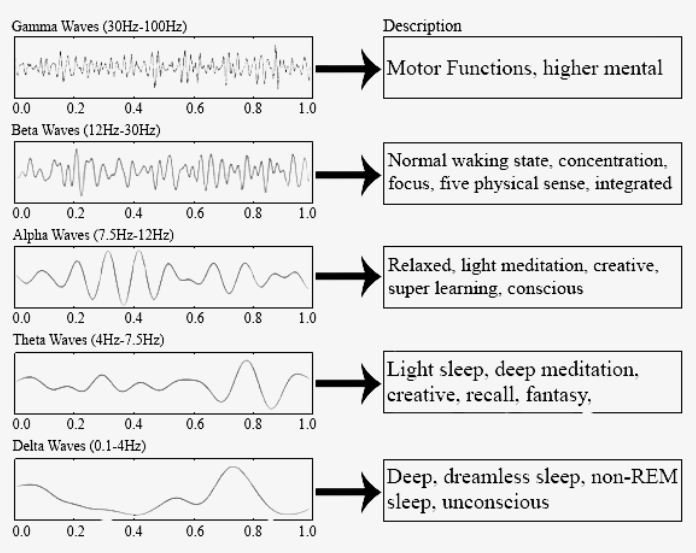
Understanding Brain Waves: The Frequencies of Human Consciousness
The human brain operates through a complex symphony of electrical impulses known as brain waves. These rhythmic patterns of neural activity reflect our mental, emotional, and energetic states at every moment. Measured in hertz (Hz), brain waves represent the frequency of oscillations occurring within the brain’s neural circuits.
Scientific research has identified five primary brainwave states — Delta, Theta, Alpha, Beta, and Gamma — each associated with specific levels of consciousness, awareness, and cognitive function. In PranaWave Coaching, understanding these states is essential, as breath and awareness can directly influence the frequency and coherence of brain activity, facilitating transformation during coaching sessions.
1. Gamma Waves:
Gamma waves are the fastest brain waves, oscillating at frequencies of 30 to 100 cycles per second (Hz). They are linked to heightened states of focus, cognition, and perception. Gamma waves are associated with peak mental performance, including problem-solving, memory recall, and creative insight. They are often observed during moments of intense concentration or during tasks requiring cognitive flexibility and integration of information.

2. Beta Waves:
Beta waves have frequencies ranging from 12 to 30 Hz and are characteristic of wakefulness and active mental engagement. These brain waves are associated with alertness, logical thinking, and active problem-solving. Beta waves dominate our consciousness during waking hours, facilitating activities such as decision-making, analysis, and communication. However, excessive beta activity can lead to feelings of stress, anxiety, and overstimulation.

3. Alpha Waves:
Alpha waves oscillate at frequencies of 8 to 12 Hz and are prominent during states of relaxed wakefulness and calm attentiveness. They are often associated with a state of “flow” characterized by enhanced creativity, mindfulness, and mental clarity. Alpha waves are prevalent during activities such as meditation, daydreaming, and light relaxation. Cultivating alpha wave activity can promote relaxation, stress reduction, and overall well-being.

4. Theta Waves:
Theta waves have frequencies ranging from 4 to 8 Hz and are typically observed during states of deep relaxation, meditation, and light sleep. These brain waves are associated with deep introspection, emotional processing, and subconscious exploration. Theta waves play a crucial role in accessing the subconscious mind, facilitating creativity, intuition, and insight. They are often experienced during moments of inspiration, vivid dreaming, and hypnagogic states.

5. Delta Waves:
Delta waves are the slowest brain waves, oscillating at frequencies below 4 Hz. They are most commonly observed during deep, dreamless sleep and states of unconsciousness. Delta waves are essential for restorative sleep, physical healing, and rejuvenation. They are associated with processes of cellular repair, immune function, and growth hormone release. While predominantly present during sleep, delta waves may also emerge during deep meditation or profound states of trance.
The Connection Between Breath and Brain Waves
Breath is the most direct bridge between body, mind, and energy. Every inhalation and exhalation subtly shifts the electrical rhythm of the brain. Slow, deep breathing activates the parasympathetic nervous system, reducing high Beta activity and guiding the brain toward Alpha and Theta states.
Scientific studies show that rhythmic breathing patterns increase heart rate variability (HRV), balance hemispheric communication, and synchronize neural oscillations — a phenomenon known as brainwave entrainment. When this occurs, the mind becomes calm, awareness expands, and the individual accesses higher levels of clarity and presence.
In PranaWave Coaching, breath techniques derived from Pranayama and mindfulness-based breathing are used to regulate these oscillations intentionally. This practice allows both coach and client to enter the Alpha state, enhancing empathy, intuition, and coherence within the session.
Brainwave Coherence in Coaching Practice
A coherent brainwave pattern reflects internal harmony — the alignment of thought, emotion, and physiology. When the coach operates in an Alpha or Theta state, the session becomes energetically attuned. The client unconsciously entrains to the coach’s rhythm through subtle energetic resonance, often referred to as limbic synchronization or neural mirroring.
This process enhances communication, safety, and trust, allowing the client to access deeper layers of awareness. By consciously integrating Prana and breath awareness, PranaWave Coaching introduces a bioenergetic dimension to coaching — one that unites neuroscience, mindfulness, and energy consciousness.
Conclusion
Brain waves are not merely electrical patterns; they are mirrors of consciousness. Each frequency corresponds to a unique way of perceiving and experiencing life. Through conscious breathing and Prana awareness, it becomes possible to shift from stress-driven Beta states to harmonious Alpha and expansive Gamma states — where creativity, insight, and alignment flourish.
The integration of breath science and coaching creates a bridge between ancient wisdom and modern neuroscience. PranaWave Coaching uses this understanding to help individuals move from mental noise to energetic coherence — from doing to being — awakening the full potential of the human mind and spirit.
The Nervous System
The Bridge Between Mind, Body, and Breath
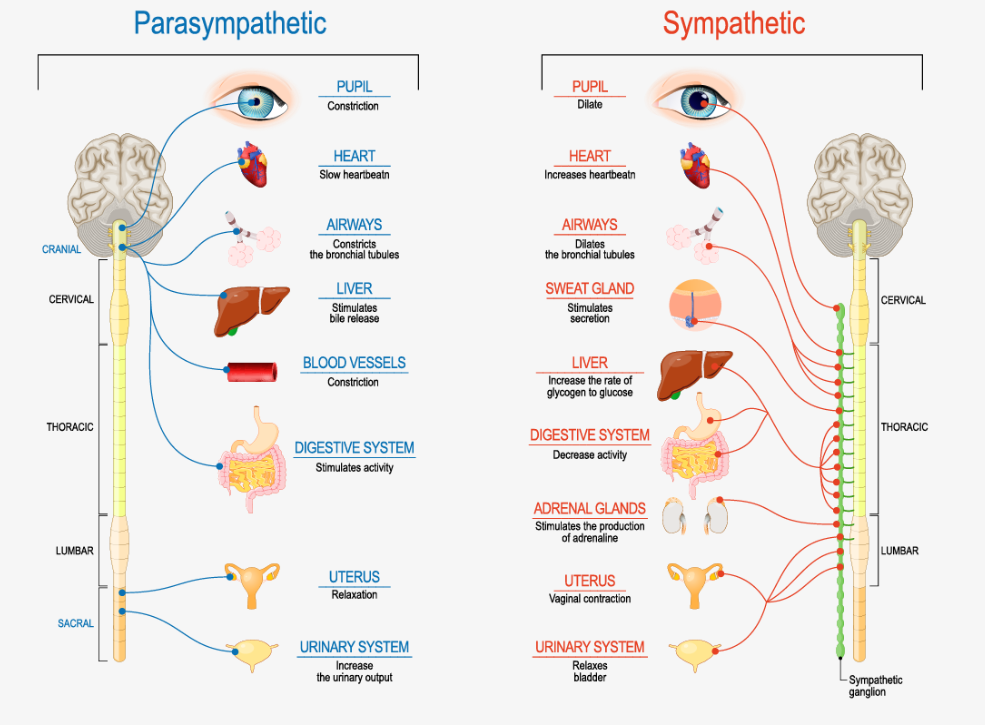
The nervous system is the body’s central communication network — a complex and highly coordinated system that regulates every thought, emotion, and physical response. It transmits signals between the brain, spinal cord, and the body’s organs through an intricate web of neurons and electrical impulses.
In the context of coaching and conscious breathing, understanding the nervous system — especially the balance between the sympathetic and parasympathetic divisions — is essential. This balance determines not only how we respond to stress but also how we access creativity, emotional intelligence, and presence.
Structure of the Nervous System
The human nervous system is divided into two main parts:
1. Central Nervous System (CNS) – consisting of the brain and spinal cord, it processes information and coordinates voluntary and involuntary actions.
2. Peripheral Nervous System (PNS) – consisting of all the neural pathways outside the brain and spinal cord, it transmits information between the CNS and the rest of the body.
The Peripheral Nervous System itself has two major functional branches:
• The Somatic Nervous System, responsible for voluntary movements and sensory processing.
• The Autonomic Nervous System (ANS), which controls involuntary functions such as heart rate, breathing, digestion, and glandular activity.
It is the Autonomic Nervous System (ANS) that plays the central role in the PranaWave Coaching model, as it governs the body’s energetic and physiological responses to internal and external stimuli.
The Autonomic Nervous System: Two Opposite but Complementary Forces
The Autonomic Nervous System is composed of two complementary branches:
A. The Sympathetic Nervous System (SNS) — The Accelerator
The Sympathetic Nervous System activates the body’s “fight or flight” response. It prepares the organism to face challenges, danger, or stress by mobilizing energy and increasing alertness.
When the SNS is dominant:
- Heart rate and blood pressure increase
- Breathing becomes rapid and shallow
- Pupils dilate
- Blood flow shifts from digestion to muscles
- Stress hormones (such as adrenaline and cortisol) are released
This activation was evolutionarily designed for survival, but in modern life, constant stimulation — through overwork, digital stress, or emotional tension — keeps many people in a chronic sympathetic state, leading to fatigue, anxiety, and disconnection from self-awareness.
B. The Parasympathetic Nervous System (PNS) — The Regulator
In contrast, the Parasympathetic Nervous System governs the “rest and digest” response. It restores equilibrium by slowing down heart rate, deepening the breath, and promoting digestion and cellular repair.
When the PNS is active:
- Heart rate decreases
- Breathing becomes slower and deeper
- Muscles relax
- Blood pressure stabilizes
- The immune and digestive systems are optimized
The vagus nerve, the primary channel of the parasympathetic system, plays a crucial role in this process. It connects the brain to the heart, lungs, and digestive tract, creating a powerful link between emotion, physiology, and breath.
The Role of Breath in Balancing the Autonomic Nervous System
Scientific studies have demonstrated that breathing patterns directly influence the autonomic balance.
- Shallow, rapid breathing tends to stimulate the sympathetic system, increasing tension and alertness.
- Slow, deep, rhythmic breathing activates the parasympathetic system, inducing calmness, clarity, and emotional stability.
This process, known as respiratory sinus arrhythmia, shows how the breath and heart rhythms synchronize — a physiological phenomenon that forms the basis of heart-brain coherence.
In PranaWave Coaching, this understanding is applied intentionally. By integrating pranayama-based breathing techniques, the coach guides both self and client toward autonomic coherence, where neither the sympathetic nor parasympathetic dominates. Instead, a state of dynamic balance emerges — alert yet relaxed, engaged yet grounded.
The Coherence State: Beyond Stress and Inertia
When the sympathetic and parasympathetic systems operate in harmony, the nervous system enters a coherent state.
In this state:
- Neural oscillations between the heart and brain synchronize
- Emotional reactivity decreases
- Focus and empathy increase
- Decision-making becomes more intuitive and balanced
This is the physiological foundation of presence in coaching. A coherent nervous system supports an Alpha-dominant brainwave pattern, enhancing communication, compassion, and awareness — the key elements of effective transformation.
Implications for Coaching Practice
In the coaching context, both the coach and client constantly influence each other’s nervous systems through non-verbal resonance, voice tone, and breathing rhythm.
When a coach maintains parasympathetic dominance through mindful breathing, the client subconsciously entrains to that calm state, fostering trust and psychological safety.
Conversely, when both are in high sympathetic activation, the session tends to become mentally driven and emotionally shallow.
Thus, by intentionally using breath to regulate the nervous system, the coach creates a bioenergetic field of coherence — a calm, connected environment that promotes deep insight and sustainable transformation.
Conclusion
Conclusion
The nervous system is the physiological foundation of consciousness. Its two branches — sympathetic and parasympathetic — represent the eternal rhythm of activation and relaxation, effort and surrender, yang and yin.
Through the awareness of breath, it becomes possible to consciously modulate this rhythm, transforming stress into clarity and reactivity into presence.
Within the framework of PranaWave Coaching, this understanding bridges neuroscience and ancient wisdom, offering a pathway for both coach and client to cultivate inner balance, coherence, and conscious evolution.
The Nervous System and the Energetic Channels: Bridging Science and Subtle Anatomy
The Energy Pathways of Consciousness
In yogic science, the human body is not only a biological system but also an energetic instrument — a field through which Prana, or life force, circulates.
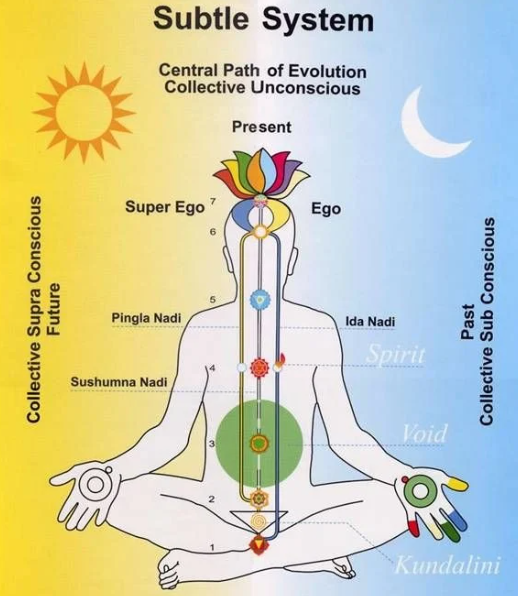
Three primary energy channels, known as nadis, regulate this flow:
- Ida Nadi — the lunar, feminine channel
- Pingala Nadi — the solar, masculine channel
- Sushumna Nadi — the central axis of balance and spiritual awakening
These nadis are not physical nerves but subtle energetic counterparts to the nervous system and the spinal column. Together, they form the foundation of human physiology, psychology, and consciousness.
Modern neuroscience offers a parallel understanding: the autonomic nervous system and the cerebral hemispheres express the same dual and integrative dynamics described thousands of years ago in yogic philosophy.
Ida and Pingala: The Two Currents of Human Experience
Ida Nadi – The Lunar, Feminine Energy
Ida flows along the left side of the spine and corresponds to the right hemisphere of the brain. It is associated with intuition, emotion, creativity, empathy, and receptivity.
Physiologically, Ida represents the parasympathetic nervous system, which governs relaxation, digestion, and restoration.
Its qualities are cooling, nurturing, and inward, symbolized by the moon. Ida’s activation leads to calmness, compassion, and introspection — the foundation of emotional intelligence in coaching and personal growth.
Pingala Nadi – The Solar, Masculine Energy
Pingala runs along the right side of the spine and connects to the left hemisphere of the brain, which governs logic, analysis, reasoning, and action.
Physiologically, it reflects the sympathetic nervous system, responsible for alertness, focus, and mobilization.
Pingala’s qualities are warming, activating, and outward, symbolized by the sun. Its activation brings motivation, structure, and clarity — essential elements for decision-making and manifestation.
Sushumna Nadi: The Path of Integration
Between these two dual currents lies the Sushumna Nadi, the central channel that runs along the spinal cord, corresponding to the midline of the nervous system — including the vagus nerve and the central integration pathways of the brain and body.
When Ida and Pingala are balanced through breath and awareness, Prana naturally ascends through Sushumna, creating a state of inner harmony and higher consciousness.
From a neurological perspective, this balance reflects coherence between the left and right hemispheres — resulting in improved neural communication, emotional balance, and intuitive cognition. This alignment allows access to Alpha and Gamma brainwave states, where both hemispheres synchronize and the individual experiences unity, flow, and expanded awareness.
Ida Pingala and Sushumna Nadi
The Breath as the Regulator Between the Two Energies
Every inhalation and exhalation subtly influences Ida and Pingala.
- Inhalation predominantly activates Pingala (sympathetic/left brain), increasing alertness and focus.
- Exhalation activates Ida (parasympathetic/right brain), promoting calmness and introspection.
Through conscious breathing practices, or Pranayama, one can intentionally regulate the balance between these two currents. This rhythmic alternation mirrors the natural switching of nasal dominance that occurs every 90 to 120 minutes — a physiological phenomenon confirmed by modern research and known as the nasal cycle.
This subtle shift in airflow between the nostrils reflects alternating dominance of the autonomic branches and brain hemispheres, scientifically affirming what yogic texts described as the alternating flow of Ida and Pingala thousands of years ago.
The Integration in PranaWave Coaching
In PranaWave Coaching, this understanding becomes a practical tool.
By guiding clients into conscious breathing and hemispheric balance, the coach helps activate the Sushumna pathway — a state of coherence where thought, emotion, and energy operate in unity.
This integration supports:
- Emotional regulation (Ida)
- Focused cognition and grounded action (Pingala)
- Expanded awareness and insight (Sushumna)
It is in this balanced state that both masculine solar energy (Pingala) and feminine lunar energy (Ida) harmonize, awakening the heart-centered intelligence that transcends duality. This harmony not only enhances mental performance but also cultivates compassion, empathy, and creative flow — essential dimensions in coaching and human transformation.
Conclusion
The dialogue between yogic wisdom and neuroscience reveals that the pathways of Prana and the neural circuits of the brain are reflections of one integrated system.
Ida and Pingala represent the eternal polarity of human existence — rest and action, feeling and thinking, moon and sun — while Sushumna represents their union, the state of coherence and awakened consciousness.
Through breath awareness, PranaWave Coaching harnesses this natural rhythm to bring coaches and clients into alignment — balancing the nervous system, harmonizing brain hemispheres, and awakening the energy of love and clarity within.
When the breath flows freely through both channels and rises along Sushumna, the mind becomes still, the heart opens, and the individual returns to their original state of balance — where Prana, awareness, and life are one.
The Essence of Collaboration in Coaching
Coaching is not a one-directional process of guidance; it is a co-creative partnership that unfolds through mutual trust, curiosity, and awareness.
In Collaborative Coaching, both coach and client engage as equal participants in the exploration of meaning, potential, and transformation.
This approach emphasizes that growth does not emerge from instruction but from presence, empathy, and conscious dialogue — a dynamic field where two awareness systems resonate and evolve together.
At its foundation lies the understanding that human connection itself is a catalyst for change. When a coach embodies openness, deep listening, and non-judgment, the client feels safe to access deeper layers of truth, emotion, and creativity
The Science of Connection
Modern neuroscience supports the significance of relational depth in coaching.
Human brains are socially wired; through mechanisms such as mirror neurons, emotional resonance, and limbic synchronization, we continuously exchange information on subtle energetic and emotional levels.
In a coherent coaching relationship:
- The autonomic nervous systems of both coach and client begin to synchronize.
- Heart rate variability (HRV) increases, indicating calm alertness.
- • The prefrontal cortex (responsible for empathy and insight) becomes more active.
This physiological alignment is the scientific foundation of what coaches experience as “presence” — a grounded, intuitive state where communication becomes fluid and transformative.
ICF Core Competencies and Relational Mastery
The International Coaching Federation (ICF) defines coaching as a partnership that stimulates thought and creativity, inspiring clients to maximize their personal and professional potential. Within this framework, the core competencies highlight the critical role of relationship and presence in effective coaching.
The competencies most closely related to Collaborative Coaching include:
1. Demonstrates Ethical Practice
Acting with integrity, confidentiality, and respect ensures a foundation of safety and trust — the soil from which authentic collaboration can grow.
2. Embodies a Coaching Mindset
This involves continuous self-awareness, regulation, and learning — essential qualities for maintaining balance in the relational space, especially when emotional or energetic challenges arise.
3. Establishes and Maintains Agreements
Collaboration begins with clarity. Defining roles, expectations, and desired outcomes creates psychological safety and shared responsibility.
4. Cultivates Trust and Safety
A deep relationship requires emotional attunement. When clients feel seen, heard, and valued, the brain shifts from defense (sympathetic activation) to openness (parasympathetic engagement), enabling learning and transformation.
5. Maintains Presence
Presence is more than attention; it is energetic coherence. A coach in presence regulates their nervous system, balances breath and awareness, and becomes a mirror of stability for the client.
6. Listens Actively
Active listening extends beyond words. It includes the tone, silence, body language, and subtle shifts of energy in the relational field. In PranaWave Coaching, this includes sensing the breath rhythm and emotional wave of the client.
7. Evokes Awareness
Collaboration means co-discovery. The coach uses questions, reflections, and intuitive insights to guide the client toward their own wisdom — activating both cognitive and energetic awareness.
8. Facilitates Client Growth
In deep collaboration, transformation is not imposed but emerges organically. The client integrates insight with embodied awareness, leading to sustainable change.
The Role of Breath and Prana in Collaborative Presence
In PranaWave Coaching, collaboration extends beyond conversation; it includes energetic resonance through breath. When both coach and client synchronize breathing rhythms, their nervous systems align, creating a shared field of calm awareness.
This physiological coherence enhances:
- Emotional empathy
- Intuitive communication
- Cognitive flexibility
- • Mutual trust and creativity
Such relational attunement transforms the coaching space into a living field of consciousness — a place where both participants evolve. The coach becomes not only a facilitator of change but a mirror of coherence, guiding the client toward balance and inner harmony.
Conclusion
Collaborative Coaching reflects the evolution of coaching as both a science and an art — where psychology, neuroscience, and spirituality meet in the practice of presence.
The depth of the coaching relationship is not defined by methods alone but by the quality of connection between two conscious beings.
By integrating the ICF competencies with breath awareness and energetic regulation, PranaWave Coaching expands the traditional model of collaboration into a holistic, embodied experience — where transformation happens not just through dialogue but through resonance.
In this relational field, the coach’s coherence becomes the client’s compass, and the shared breath becomes the rhythm of awakening.
Methodology
Participants:
Fifteen volunteer clients participated in this project. Each client attended five coaching sessions, held once a week, with each session lasting approximately one hour.
Session Structure:
Each session followed the Prana Wave Coaching model — an integrative approach combining pranayama techniques, brainwave awareness, and transformational coaching. The focus was to explore how conscious breathing and pranic activation influence the client’s mental, emotional, and energetic coherence.
All participants signed a consent form confirming their voluntary participation and full agreement with the coaching process, data collection, and confidentiality terms.
Assessment Tools
1. Pre-session Questionnaire: Designed to evaluate the client’s initial mental and emotional state, awareness of breath, and perceived energy balance.
2. Post-session Questionnaire: Used to assess the progress after each session in terms of focus, calmness, awareness, and energy perception.
3. Coach Observation Form: Completed by the coach after each session to record observations, quality of presence, and level of pranic activation, scored through a specific coefficient system.
4. Client Self-Evaluation Form: The client also rated their own level of transformation and pranic experience using a similar coefficient scale.
5. Final Feedback Survey: Conducted after the fifth session to gather reflections on the overall experience, session effectiveness, and the quality of the coach–client relationship.
Documentation:
Each session was documented through detailed notes and pranic impact coefficients. The data collected from all tools were analyzed to measure changes and identify patterns of transformation throughout the five-week process.
Appendices:
Sample questionnaires, evaluation forms, and the pranic coefficient scoring model are included in the appendix to provide transparency and replicability of the research process.
.